
How Many Visits Does It Really Take to Complete a Root Canal?
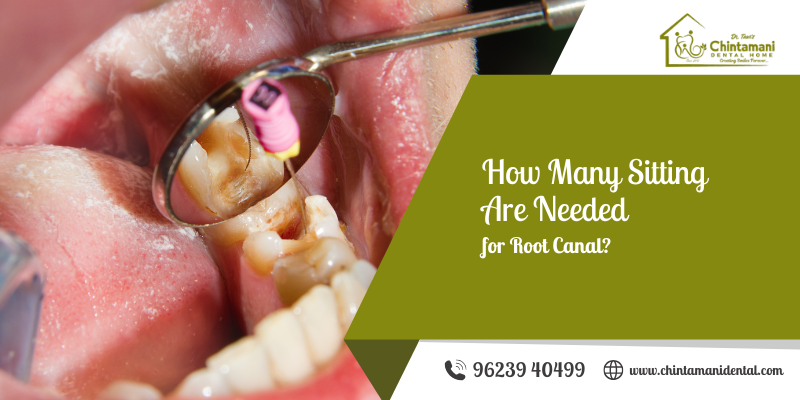
You wake up with a dull ache that refuses to leave. It lingers through your morning chai, grows sharper with every bite, and quietly starts affecting your day. At some point, you begin searching for solutions, and that’s when root canal treatment often comes into the picture. But just as quickly, another question follows you around: how long is this going to take?
At Chintamani Dental Clinic, many patients walk in with this exact concern. Not because they fear the procedure, but because they want clarity. They want to plan their time, understand the process, and most importantly, feel reassured that they’re making the right decision.
The answer, however, doesn’t sit neatly in a number. And that’s where things get interesting.
Why Isn’t the Number of Visits Always Fixed?
Most people expect a fixed answer when they think about rct. One visit? Two? Maybe three? The reality depends on what’s happening inside your tooth.
Dentists look at several factors before deciding how many sittings your root canal treatment procedure might require:
- The extent of infection inside the tooth
- Presence of swelling in gums or abscess
- Complexity of the tooth structure
- Previous dental work on the same tooth
- Patient comfort and response during treatment
A tooth with a mild infection often responds faster. In such cases, a painless root canal treatment can sometimes be completed in a single sitting. On the other hand, a deeper infection may need multiple visits to ensure complete cleaning and healing.
Think of it less like a fixed schedule and more like a step-by-step process personalized according to your tooth.
How Does RCT Work?
Before you count the sittings, it helps to understand what actually happens during a root canal treatment procedure. Each step plays a role in deciding how long the treatment takes.
Here’s how the process typically unfolds:
- The dentist examines the tooth and takes X-rays
- Local anesthesia ensures a painless RCT experience
- The infected pulp is carefully removed
- The inner canals are cleaned and disinfected
- Medication may be prescribed if the infection persists
- The tooth is sealed temporarily or permanently
In advanced cases, especially with advanced root canal treatment, dentists use modern tools like rotary instruments and digital imaging. These techniques speed up the process while improving precision, sometimes reducing the number of visits needed.
Single Sitting vs Multiple Sitting Root Canal Treatment
| Aspect | Single Sitting | Multiple Sitting |
|---|---|---|
| Infection | Minimal infection | Severe infection or pus |
| Swelling in Gums | No swelling in gums | Swelling in gums present |
| Tooth Condition | Strong structure | Complex root structure |
| Comfort | Longer single visit | Shorter multiple visits |
| Approach | Painless root canal treatment in one go using advanced root canal treatment | Staged root canal treatment procedure with medication |
| Outcome | Saves time | Better healing, less reinfection |
At Chintamani Dental Clinic, we help patients choose between a painless RCT and a staged root canal treatment procedure, depending on infection and swelling in gums, to ensure safe and lasting results.
What Decides the Number of Sittings?
No two teeth behave the same way. Even two patients with similar symptoms may need different approaches for RCT.
Here are key factors that influence the number of visits:
1. Infection Severity
A deeper infection needs more time to clean thoroughly. Dentists may spread the root canal treatment procedure over multiple sittings to ensure all bacteria are removed.
2. Presence of Swelling
Visible swelling in gums often signals active infection. Dentists usually avoid sealing the tooth immediately in such cases and prefer staged treatment.
3. Tooth Type
Molars, with multiple canals, often require more time compared to front teeth. This directly affects how many sittings your advanced root canal treatment may take.
4. Patient Comfort
Some patients prefer shorter appointments. Dentists may divide the RCT into multiple visits to keep the experience comfortable.
5. Technology Used
Clinics offering advanced root canal treatment often complete procedures faster due to improved tools and techniques.
Do More Sittings Mean A Higher Cost?
This concern naturally follows the discussion. Patients often wonder if more visits increase the root canal treatment cost.
The cost usually depends on:
- Tooth type (front tooth vs molar)
- Complexity of the case
- Technology used in advanced root canal treatment
- Additional procedures like crowns
While multiple sittings may slightly influence the root canal treatment cost, dentists prioritize successful outcomes over speed. After all, the goal remains saving natural tooth, not rushing through the process.
Why Rushing a Root Canal Can Backfire
In a world where everything happens quickly, it’s tempting to expect the same from dental treatments. But teeth don’t follow deadlines.
If a dentist rushes the root canal treatment procedure in a complex case:
- Infection may remain inside
- Pain can return later
- The tooth may require retreatment
- Chances of extraction increase
A properly planned painless root canal treatment focuses on long-term success. Sometimes, slowing down actually leads to faster healing.
Signs You Might Need More Than One Sitting
Your tooth often gives subtle signals. Paying attention to them helps you understand why your dentist recommends multiple visits for root canal treatment.
Watch for:
- Persistent pain even after initial cleaning
- Visible swelling in gums
- Sensitivity while chewing
- History of repeated dental issues in the same tooth
In such cases, dentists extend the root canal treatment procedure to ensure complete healing.
The Role of Modern Dentistry
The way dentists perform RCT today looks very different from a decade ago. With advanced root canal treatment, the focus has shifted to precision, comfort, and efficiency.
Modern tools help:
- Reduce treatment time
- Improve cleaning accuracy
- Enhance patient comfort
- Increase success rates
This is why many patients now experience painless RCT even in fewer sittings. However, technology supports the process; it doesn’t replace clinical judgment.
What Happens After the Final Sitting?
Once the cleaning and sealing are complete, the journey doesn’t end there. The dentist often recommends a crown to protect the tooth.
This step plays a crucial role in:
- Preventing fractures
- Restoring chewing function
- Supporting long-term saving of natural tooth
Skipping this step may compromise the results of your root canal treatment procedure, even if everything else goes perfectly.
FAQs
What is the minimum cost for root canal treatment?
The root canal treatment cost depends on the type of tooth and the complexity of the case. For front teeth, the root canal treatment usually ranges between ₹3,000 and ₹6,000, while premolars may cost ₹4,000 to ₹8,000. Molars, which require a more detailed root canal treatment procedure, can cost between ₹5,000 and ₹12,000 due to multiple canals. The final cost also depends on factors like infection severity, the presence of swelling in gums, and whether a crown is needed. Clinics offering advanced root canal treatment may use modern technology, which can influence pricing but also improve accuracy and comfort. Overall, the goal remains saving natural tooth while ensuring long-term results.
What are the possible complications of a root canal treatment?
A root canal treatment is generally safe, especially when performed using advanced root canal treatment techniques, but some risks may occur in rare cases. Reinfection can happen if bacteria remain inside the tooth or re-enter due to an incomplete seal after the root canal treatment procedure. Some patients may experience mild discomfort or sensitivity, particularly if there was severe swelling in gums before treatment. Over time, the treated tooth may become slightly brittle, which is why dentists recommend a crown for saving natural tooth. In very rare situations, complications like instrument breakage or temporary nerve irritation may occur. However, a painless RCT performed by an experienced dentist significantly reduces these risks.
Can a root canal cause any serious health problems?
No, root canal treatment does not cause serious diseases like cancer, as this belief comes from outdated and discredited research. A properly performed painless root canal treatment removes infection and improves oral health. Although some discussions link oral bacteria to systemic conditions, no strong evidence connects them to a root canal treatment procedure. With advanced root canal treatment, dentists effectively prevent reinfection while saving natural tooth and avoiding complications like swelling in gums.
The Real Answer Lies in Your Tooth
By now, you’ve probably realized that the number of sittings for root canal treatment doesn’t follow a fixed rule. Your tooth decides the pace, and your dentist guides the process.
Some treatments finish quickly. Others take time. But every step aims toward one goal, saving natural tooth while ensuring comfort and long-term health.
If you’ve been delaying your visit because you’re unsure about the time commitment, it might help to get a personalized evaluation. At Chintamani Dental Clinic, dentists often begin with a simple consultation that answers more than just one question.
And sometimes, that first step makes everything else feel a lot easier.