
What is a Space Maintainer? A Simple Guide for Parents
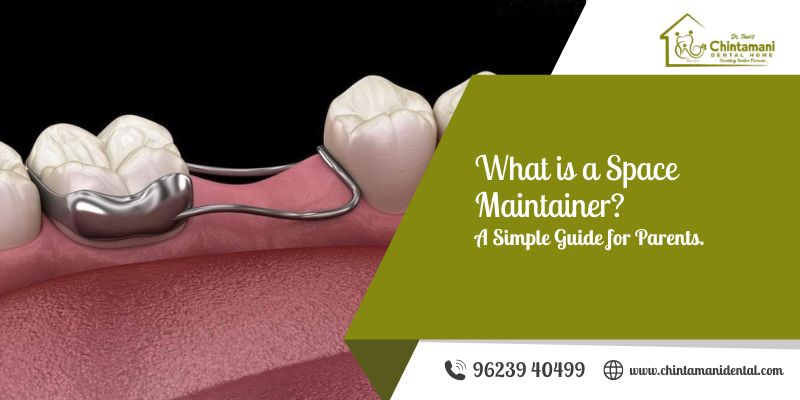
One tiny baby tooth falls out early, and suddenly dentists start talking about “space maintainers.”Crown and loop space maintainer
Most parents immediately think:
“Wait… It’s just a milk tooth. Another tooth will come anyway, right?”
Technically yes.
But sometimes when a baby tooth is lost too early, nearby teeth slowly start shifting into that empty space. And when the permanent tooth finally tries to erupt later… There may not be enough room left.
That’s exactly where space maintainers for kids become important.
At Chintamani Dental Clinic in Karad, Dr. Swapnil Taur often explains to parents that space maintainers are not about replacing missing teeth permanently. They are mainly used to protect the space needed for proper alignment and future tooth eruption.
And honestly, catching these problems early can sometimes help avoid much bigger orthodontic issues later.
Why Do Baby Teeth Matter So Much?
Many parents assume baby teeth are temporary and therefore not very important.
But baby teeth actually play a major role in:
- chewing
- speech development
- jaw growth
- guiding permanent teeth
When a baby tooth is lost early due to decay, trauma, or infection, the nearby teeth may slowly drift into the empty space.
This may interfere with:
- proper dental arch development
- alignment of future teeth
- normal chewing patterns
Over time, it may contribute to:
- tooth spacing issues
- crooked teeth
- bite problems
- future orthodontic treatment needs
What Exactly Is a Space Maintainer?
A space maintainer is a small dental appliance designed to hold the empty space left behind after early tooth loss.
The goal is simple:
keep the surrounding teeth from shifting until the permanent tooth erupts properly.
Different types of space maintainers for kids are used depending on:
- which tooth is missing
- the child’s age
- jaw development
- how many teeth are affected
These appliances help support the healthier eruption of permanent teeth while reducing the risk of alignment problems later.
When Might a Child Need One?
Children may require space maintainers for kids if they lose a baby tooth too early because of:
- severe decay
- injury
- infection
- extraction
- developmental issues
This type of premature tooth loss in children can create spacing problems if left untreated.
The longer the space remains unprotected, the higher the chance that nearby teeth begin shifting.
What Happens If the Space Is Not Maintained?
Imagine reserving a parking spot and then leaving it empty for months.
Eventually, someone else occupies it.
Teeth behave similarly.
Without proper space maintenance:
- nearby teeth drift
- spacing reduces
- permanent teeth may erupt incorrectly
This may eventually increase the risk of:
- crowding of permanent teeth
- bite problems
- future braces
- alignment issues
This is one reason dentists monitor jaw development in kids carefully after early tooth loss.
Types of Space Maintainers
There are different types of appliances depending on the child’s dental condition.
Some are fixed permanently inside the mouth for a period of time, while others can be removed.
Let’s break them down simply.
Band and Loop Space Maintainer
One of the most commonly used appliances is the band and loop space maintainer.
This appliance usually consists of:
- a metal band attached to a nearby tooth
- a loop that keeps the empty space open
It is commonly used when a single baby tooth is lost early.
A band and loop space maintainer is a type of fixed space maintainer for children because it remains attached inside the mouth continuously and cannot be removed by the child. This helps maintain proper spacing more consistently during healing and growth.
A band and loop space maintainer may also function as a unilateral space maintainer when space preservation is needed only on one side of the mouth after early tooth loss.
Because of its simple design and effectiveness, it is widely recommended for younger children.
Crown and Loop Space Maintainer
If the supporting tooth itself is damaged or heavily restored, dentists may recommend a crown and loop space maintainer instead.
This version uses:
- a crown placed on the supporting tooth
- an attached loop that maintains the space
A crown and loop space maintainer may provide better stability in certain situations involving damaged baby teeth or larger restorations.
This appliance is a type of fixed space maintainer for children because it stays securely attached inside the mouth throughout the treatment period.
Depending on the location of tooth loss, a crown and loop space maintainer can also work as a unilateral space maintainer when only one side requires space maintenance.
Removable Space Maintainer
Older children may sometimes receive a removable space maintainer.
These appliances can be taken out while:
- eating
- brushing
- cleaning
However, they require good responsibility and regular use.
A removable space maintainer may not be ideal for every child, especially if there’s a risk of losing or forgetting the appliance.
Lingual Arch Space Maintainer
When multiple teeth are missing in the lower jaw, dentists may sometimes use a Lingual arch space maintainer.
This appliance connects across the inner side of the lower teeth and helps preserve arch space during growth.
A Lingual arch space maintainer is often useful in cases involving multiple missing teeth or broader spacing concerns.
Are Space Maintainers Painful?
Usually, no.
Children may need a few days to adjust initially, especially while:
- speaking
- chewing
- eating certain foods
But most children adapt surprisingly quickly.
At Chintamani Dental Clinic in Karad, Dr. Swapnil Taur helps parents understand how to make the adjustment period easier with proper hygiene guidance and follow-up care.
How Long Does a Child Need One?
The duration depends on:
- the child’s age
- which tooth is missing
- eruption timing
- overall dental arch development
Some children may wear them for months, while others may require them for longer until the permanent tooth erupts properly.
Regular dental monitoring becomes important during this period.
Why Monitoring Jaw Development Matters
Children’s jaws continue growing throughout childhood.
Proper jaw development in kids directly affects:
- tooth alignment
- chewing function
- bite relationships
- facial growth
When space is lost too early, it may disturb the natural eruption path of permanent teeth.
That’s why dentists often recommend space maintainers for kids proactively instead of waiting for future problems to appear.
Can Space Maintainers Prevent Braces Later?
Not always completely.
But they may reduce the severity of future alignment problems.
Maintaining proper spacing may help lower the risk of:
- severe crowding of permanent teeth
- impacted teeth
- complex bite correction
By supporting the healthy eruption of permanent teeth, space maintainers may simplify future orthodontic treatment needs.
Signs Parents Should Not Ignore
Parents should consider a dental evaluation if:
- A baby tooth falls out very early
- Teeth start shifting visibly
- Permanent teeth erupt unevenly
- Chewing becomes difficult
- Gaps close rapidly after tooth loss
Early management of premature tooth loss in children often leads to better long-term outcomes.
Caring for a Space Maintainer
Children wearing space maintainers should:
- brush carefully
- avoid sticky foods
- avoid hard candies
- attend regular checkups
Proper care helps prevent:
- plaque buildup
- appliance loosening
- gum irritation
Good oral hygiene also supports the prevention of long-term orthodontic problems in children.
The Bigger Goal: Protecting Future Alignment
Space maintainers are not simply “tiny metal appliances.”
They are preventive tools designed to support:
- proper spacing
- healthy eruption
- balanced jaw growth
- future alignment
Protecting the space today may help avoid bigger dental complications tomorrow.
And honestly, prevention is almost always easier than correction later.
FAQs
Can space maintainers affect eating or speaking?
Children may need a short adjustment period initially, but most adapt quickly within a few days.
How long does a space maintainer usually stay in?
The duration depends on when the permanent tooth is expected to erupt. In many cases, space maintainers for kids may remain in place for several months or even a few years until the adult tooth starts coming properly into position. They help maintain proper spacing after an early lost baby tooth and reduce future alignment complications.
Are spacers more painful than braces?
Some children may feel spacers are slightly more uncomfortable initially because they create pressure between specific teeth. However, the soreness is usually temporary and improves within a few days. These appliances are commonly used as part of space maintainers for kids treatment planning to help manage developing tooth spacing issues properly. space maintainers for kids
Are spacers really necessary for kids?
Yes, in many cases, they are important. When a baby tooth is lost too early because of decay or injury, nearby teeth may shift into the empty space. This may later contribute to orthodontic problems in children and improper eruption of permanent teeth. That’s why dentists often recommend space maintainers for kids to preserve proper spacing during growth.
Are spacers painful for kids?
Children may feel mild pressure or soreness for the first few days after spacers are placed, especially while chewing. However, most children adjust quickly once the mouth becomes familiar with the appliance. Soft foods, proper hygiene, and reassurance usually help make the adjustment period easier.
Know Better, Act Faster!
Baby teeth may be temporary, but the space they protect is extremely important for future dental development.
Early tooth loss can sometimes create long-term spacing and alignment problems if ignored. That’s why the timely use of space maintainers for kids may play a valuable role in guiding healthy tooth eruption and jaw growth.
At Chintamani Dental Clinic in Karad, Dr. Swapnil Taur focuses on preventive pediatric dental care in Karad designed to support healthy smiles, proper spacing, and long-term oral development for growing children.