
Why Do Kids Feel Tooth Sensitivity After a Cavity Filling?
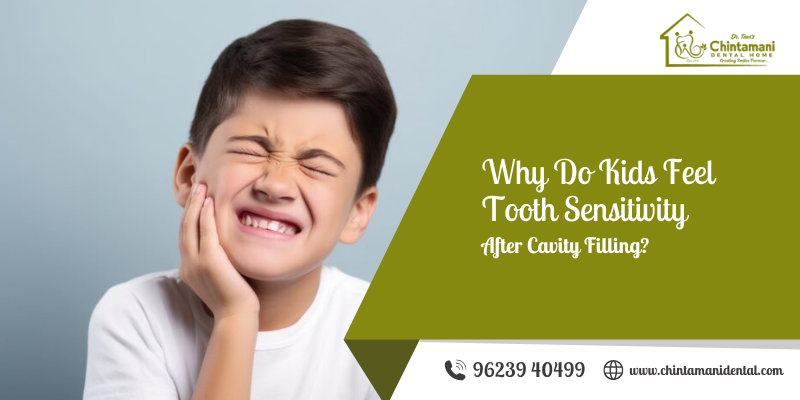
Every time your child cooperates and walks bravely out of the clinic after getting cavity fillings, there’s a sigh of relief. But how long will this relief last?
A few moments later, your kid is jumping on the sofa and crying with the loudest dramatic pitch. Reason? Unknown. They’re not chewing properly, refusing cold or hot drinks and food. This leaves you worried and confused. Wasn’t the cavity treated? Why does it still hurt?
At Chintamani Dental Clinic, parents often share similar concerns after getting a cavity filling for kids in Karad. But here’s something nobody knows. Most post-filling sensitivity has a clear explanation and a simple solution.
Let’s find it out together.
What Happens During a Filling?
To understand post-treatment sensitivity, you need to understand what a filling procedure involves.
When a child develops a cavity, bacteria break down the enamel, the protective outer layer of the tooth. If ignored, decay moves inward toward the dentin and eventually the pulp, where nerves live. During a filling, the dentist:
- Removes decayed portions of the tooth
- Cleans the cavity thoroughly
- Restores the space with a tooth-colored material
- Shapes and polishes it for a natural bite
Even though the procedure remains minimally invasive, it still involves working very close to sensitive inner structures. Think of it like repairing a small crack in a ceramic cup. Even after fixing it, the cup may feel slightly delicate for a short time.
The tooth simply needs time to settle.
Why Do Kids Feel Tooth Sensitivity After a Cavity Filling for Kids?
Now we arrive at the heart of the concern.
Children may experience mild sensitivity after a filling for several scientifically valid reasons. This reaction does not automatically mean something went wrong.
Here’s what typically causes it:
1. The Nerve Was Already Irritated
Cavities do not appear overnight. By the time you treat them, bacteria may have already irritated the nerve inside the tooth. The filling removes decay, but the nerve may still feel inflamed for a few days.
This sensitivity often shows up as:
- Discomfort with cold foods
- Mild pain while chewing
- Brief sharp sensations
The tooth behaves like skin after a splinter removal. You removed the problem, but the area needs time to calm down.
2. Deep Cavities React More
The deeper the cavity, the closer the treatment comes to the pulp. Even when the dentist carefully protects the nerve with liners or medicated bases, the inner tissue may respond temporarily.
Children sometimes describe it as:
- “Cold feels funny.”
- “It hurts when I bite hard.”
At Chintamani Dental Clinic, dentists always assess cavity depth carefully before recommending treatment. When decay sits close to the nerve, they inform parents about possible short-term sensitivity in advance.
Transparency builds trust and reduces panic later.
3. Bite Adjustment Takes Time
After a filling, your child’s bite changes slightly. Even a tiny, uneven spot can create pressure while chewing. Imagine wearing new shoes. They may look perfect, but your feet need a little time to adjust.
If the filling feels high, children may complain about:
- Pain while biting
- Jaw discomfort
- Sensitivity to pressure
Fortunately, a simple bite adjustment resolves this quickly.
4. Temporary Nerve Response
Teeth contain microscopic tubules inside the dentin. When dentists remove decay, those tubules sometimes react to temperature changes. The sensation usually reduces within a few days to two weeks.
Most children return to normal eating habits quickly.
How Long Does Sensitivity Usually Last?
In most cases, mild sensitivity improves within:
- A few days
- Up to two weeks for deeper cavities
If discomfort:
- Persists beyond two weeks
- Increases instead of decreases
- Causes spontaneous pain without triggers
Parents should schedule a follow-up.
Choosing a reliable cavity filling for kids in Karad at Chintamani Dental Clinic ensures that professionals closely monitor recovery and guide you if anything feels unusual.
When Should Parents Be Concerned?
While temporary sensitivity remains common, certain symptoms require attention:
- Severe, throbbing pain
- Swelling near the treated tooth
- Pain that wakes the child at night
- Sensitivity to hot foods that lingers
These signs may indicate deeper pulp involvement that sometimes requires further treatment.
Fortunately, early intervention prevents complications.
Helping Your Child Feel Comfortable After a Filling
You can support recovery at home with simple steps:
- Encourage soft foods for 24 hours
- Avoid extremely cold drinks initially.
- Maintain gentle brushing
- Use a child-friendly toothpaste for sensitivity if advised
Most importantly, stay calm. Children mirror your reactions. When you treat sensitivity as temporary and manageable, they do too.
Preventing Future Sensitivity
The best strategy is to prevent cavities before they start.
Here’s what truly works:
- Twice-daily brushing with fluoridated toothpaste
- Limiting sticky sugary snacks
- Drinking plenty of water
- Routine dental visits every six months
- Fluoride applications are recommended.
- Dental sealants for molars
These measures reduce the need for future treatments and protect enamel strength.
When families consistently follow preventive care, children rarely experience repeated fillings or prolonged sensitivity.
The Bigger Picture Parents Often Miss
Here is the part many families overlook.
Sensitivity does not mean failure. In many cases, it signals that the tooth still has vitality. The nerve responds because it remains alive and healing. That response, although uncomfortable, often indicates a functioning tooth structure.
When treated by experienced professionals at Chintamani Dental Clinic, offering cavity filling for kids in Karad, the goal is always to preserve natural tooth health, not just fill a hole.
And preservation sometimes involves a short healing phase.
Trust the Process, But Stay Aware
Parenting already comes with enough midnight worries. Tooth sensitivity after a filling should not become another long-term stressor.
Observe. Reassure. Follow instructions. Schedule reviews if needed.
At Chintamani Dental Clinic, dentists guide families through every step of the treatment of cavity filling for kids in Karad and recovery. They believe informed parents make confident decisions.
If your child recently underwent a cavity filling and you still have questions, do not ignore them. Schedule a check-up, ask openly, and gain clarity. Sometimes, peace of mind becomes the most important part of the treatment plan.
And here is something to reflect on.
Is the sensitivity truly a problem or simply the tooth’s quiet way of adjusting after being rescued?
The answer often reveals itself with a little patience and the right guidance.
FAQs
-
Is sensitivity normal after a cavity filling for kids?
Yes, mild sensitivity remains common after a cavity filling for kids, especially if the cavity was deep. The nerve inside the tooth may react temporarily as it heals from prior irritation. Children often feel discomfort with cold foods or pressure while chewing. This sensitivity typically improves within a few days to two weeks. If pain becomes severe or persistent, a follow-up evaluation ensures everything remains healthy.
-
Should my child avoid certain foods after a filling?
Dentists recommend soft foods for the first 24 hours after treatment. Extremely cold or sticky foods may temporarily increase sensitivity. Encourage balanced meals and plenty of water to support healing. Resume normal eating gradually as comfort improves. Good oral hygiene remains essential during recovery.
-
Can sensitivity mean the cavity was too deep?
In some cases, deeper cavities create more temporary inflammation in the nerve. Dentists use protective liners and advanced materials to shield the pulp during treatment. Most teeth recover without further intervention. However, if pain worsens or lingers beyond two weeks, evaluation helps rule out deeper pulp involvement. Early follow-up prevents complications.